Local Artist Photo Essays
This project documents local artists in Columbia, SC to highlight the diverse talent in Columbia and to explore artists’ creative processes and contributions to the cultural landscape. I contacted local artists and was able to photograph them working in their various studios, then conduct interviews with them.
One Eared Cow
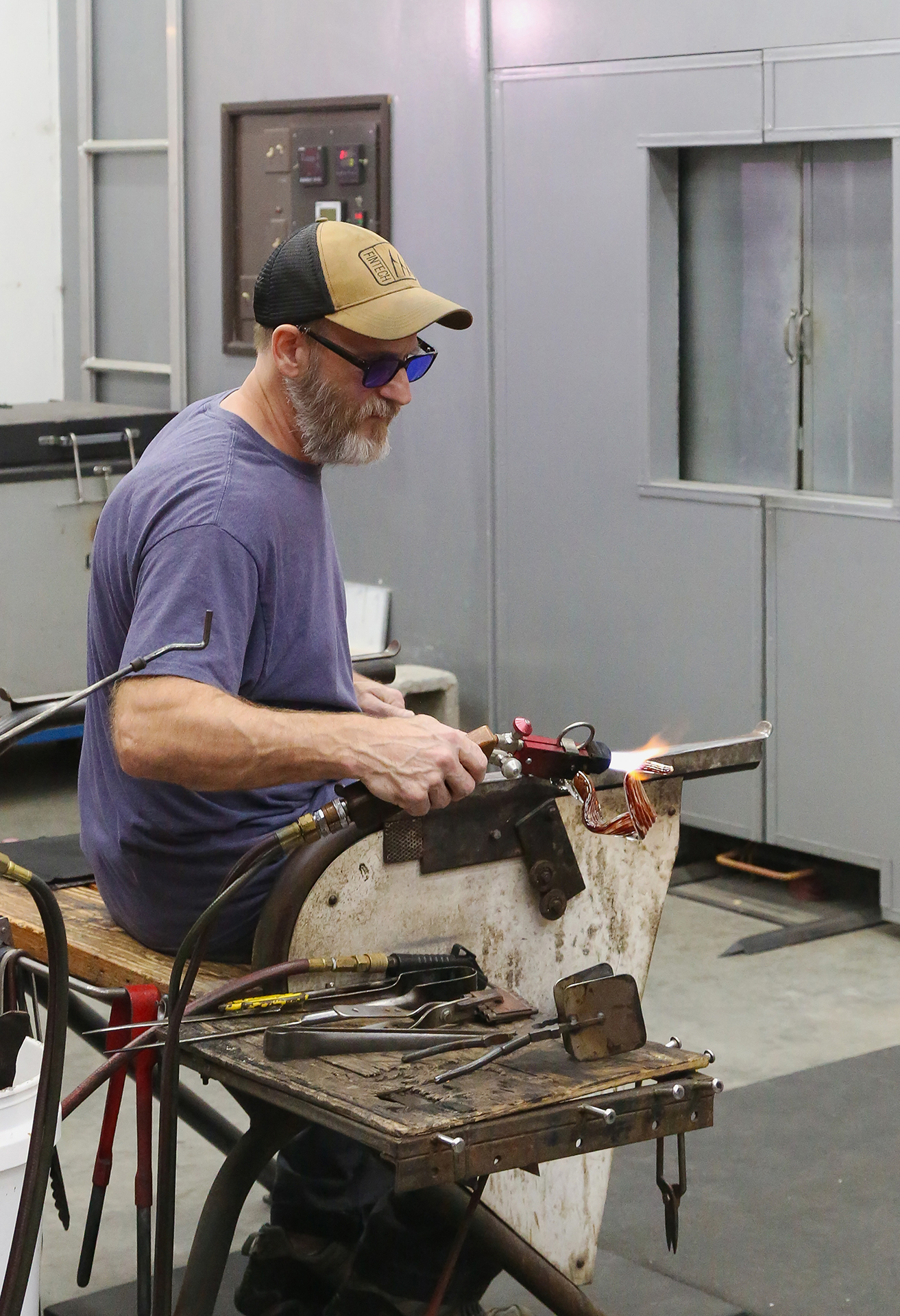
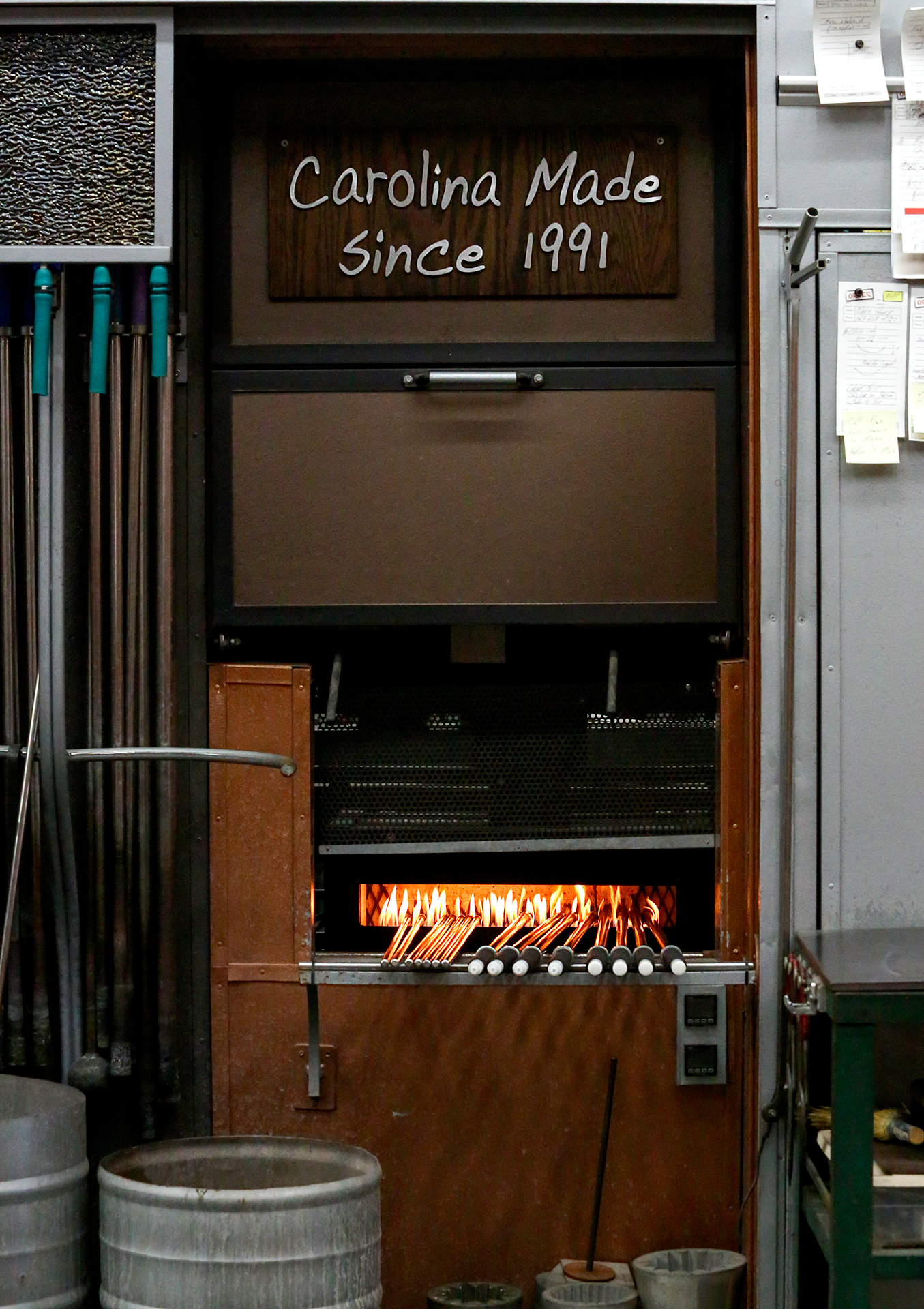
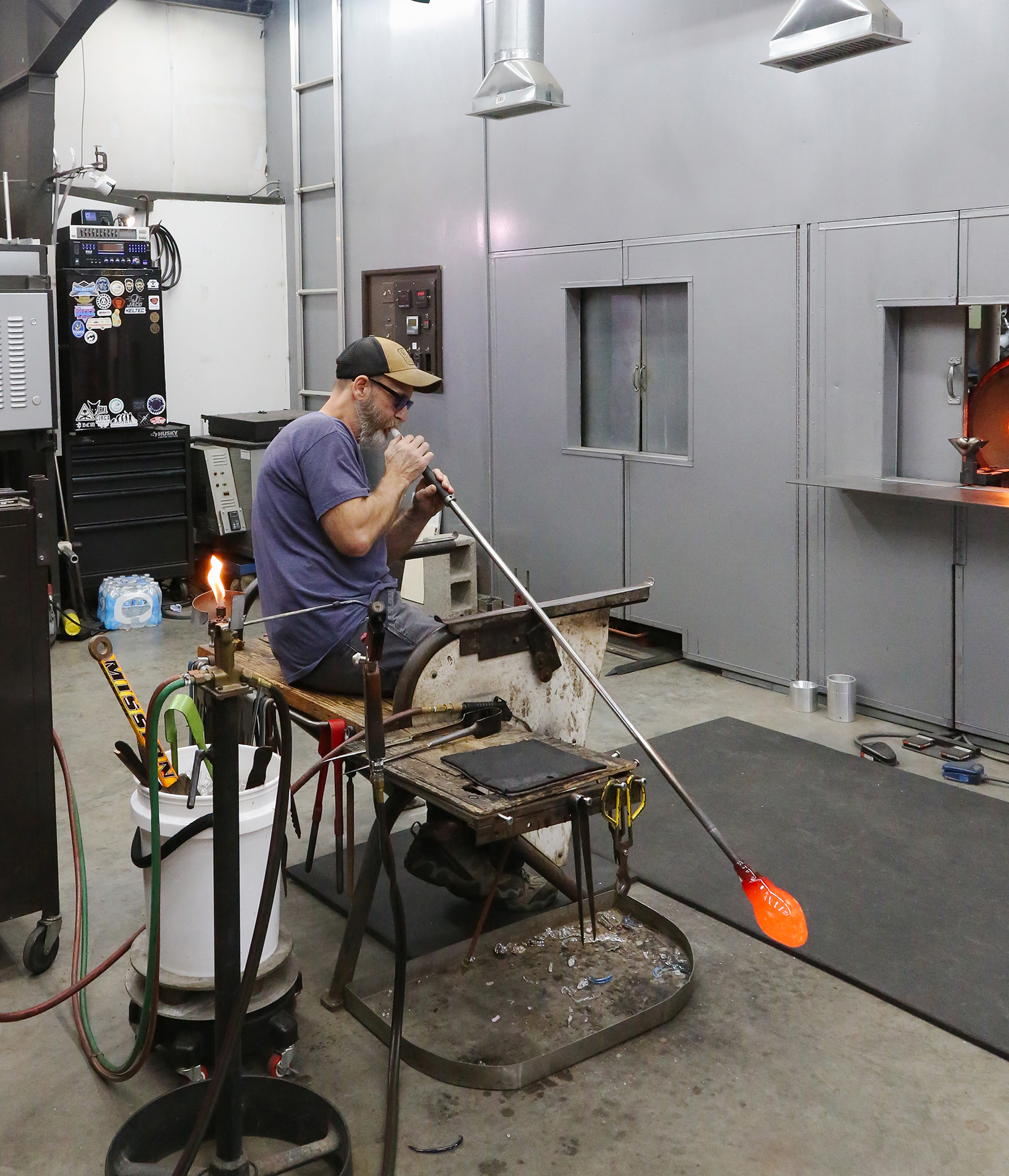
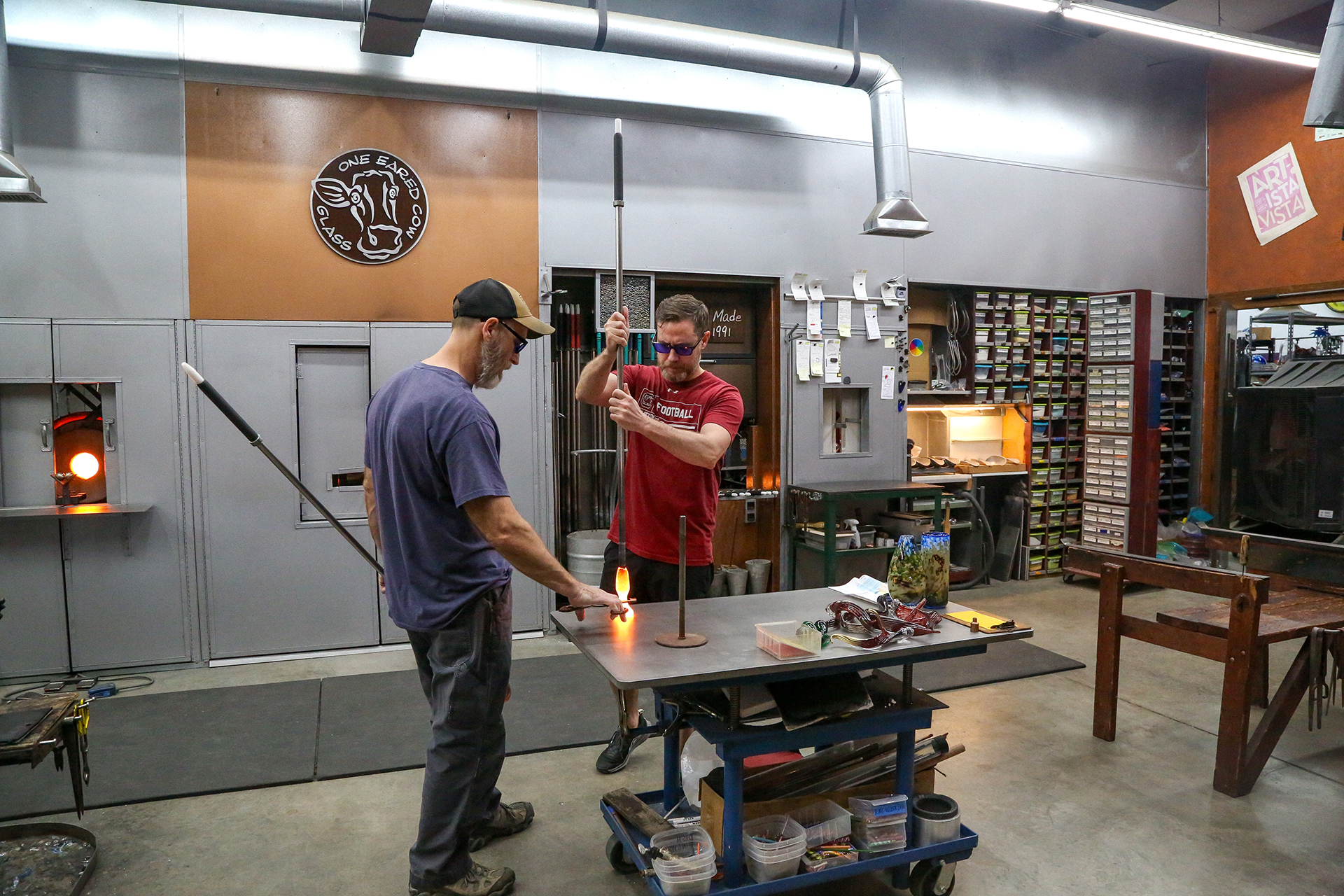
One Eared Cow is a hot glass studio and store located in Columbia, SC. Tom Lockhart has owned One Eared Cow since 1991, when he started the business after graduating from USC with two of his classmates. The name “One Eared Cow” comes from a one-eared, hand carved cow’s head that was nailed to the barn that they first started their business in – it was the only building they could afford after graduating. Lockhart describes why he enjoys his work, “I enjoy the vastness of what we are able to do and accomplish with our art and creativity.”



Alicia Leeke
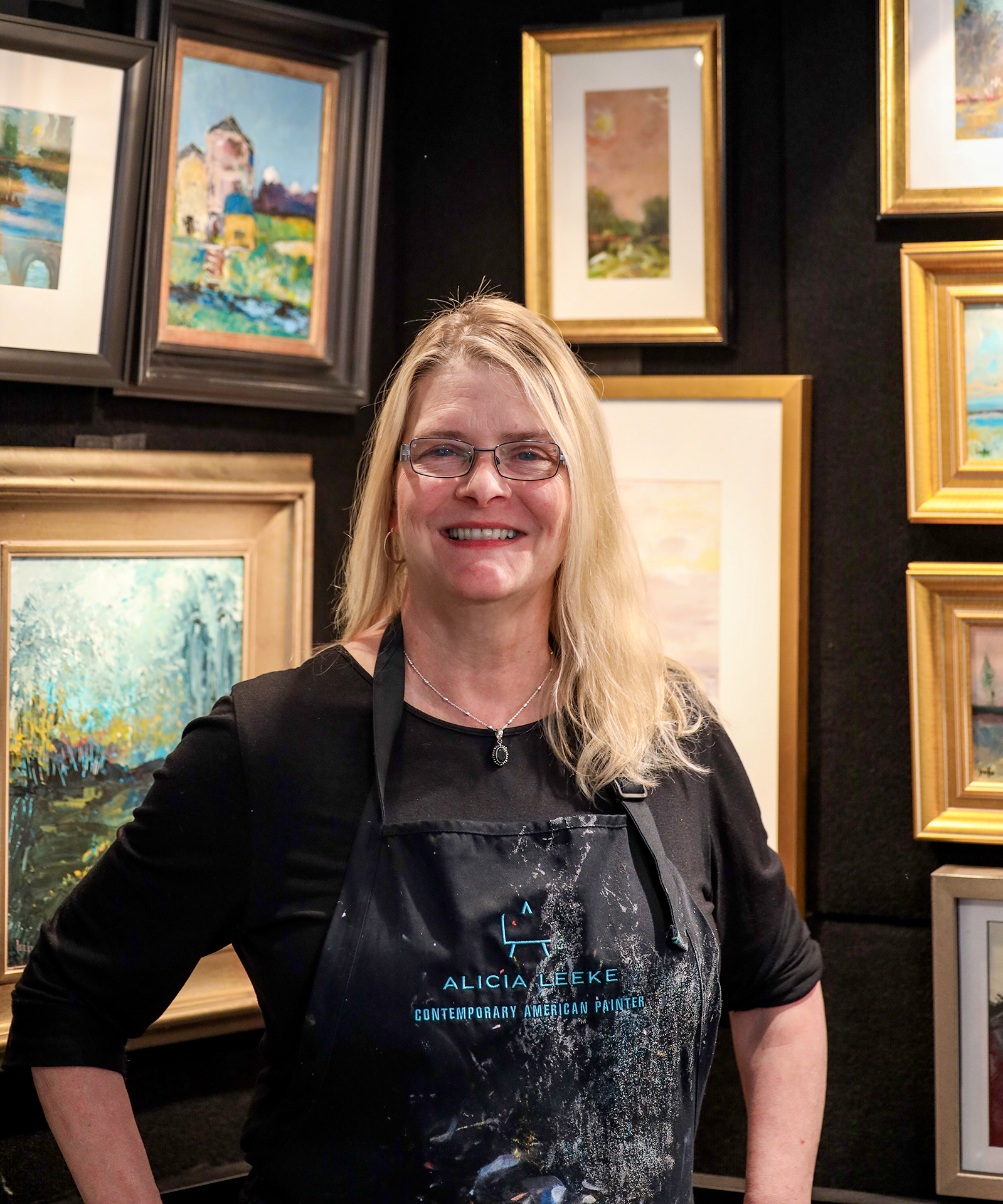
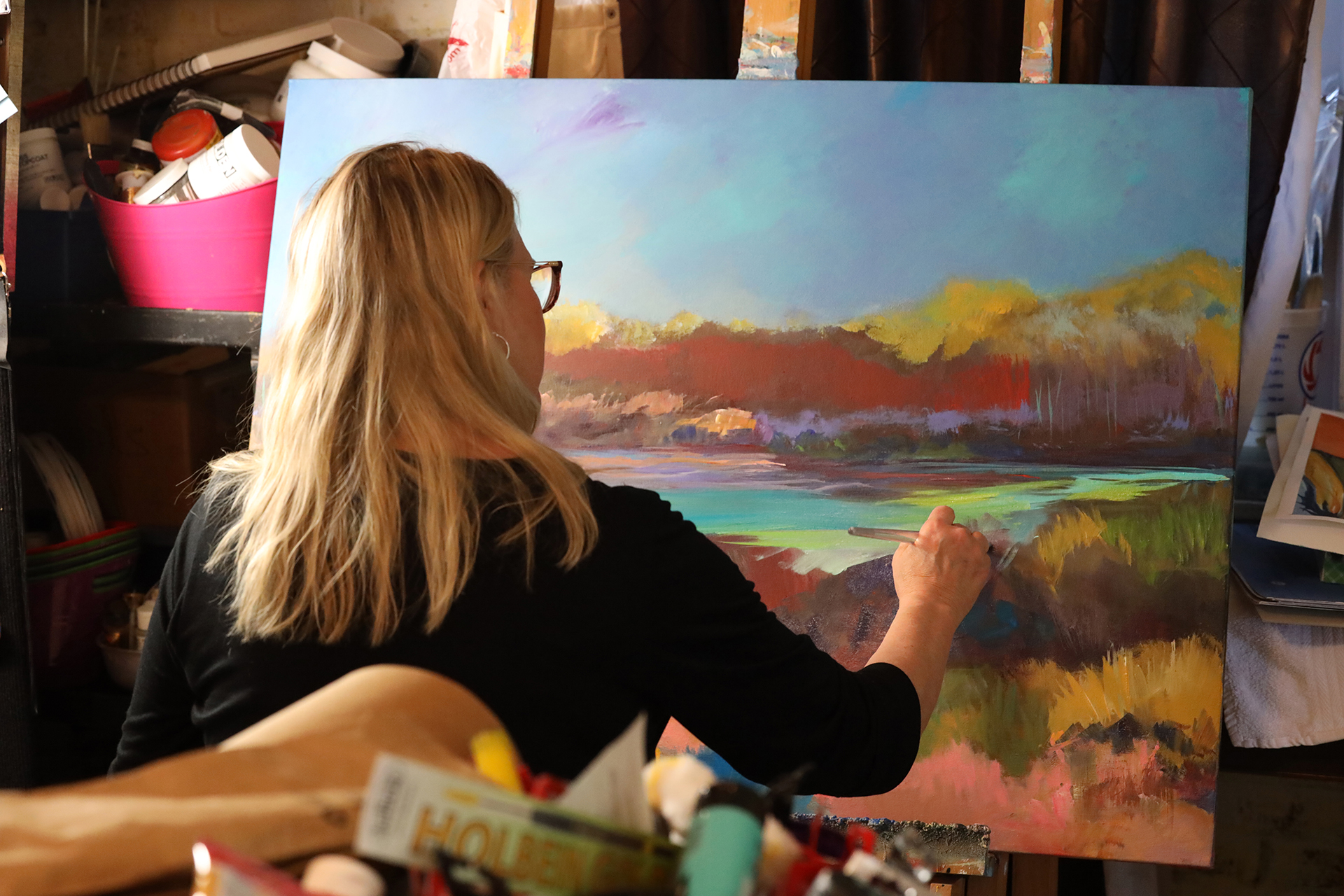
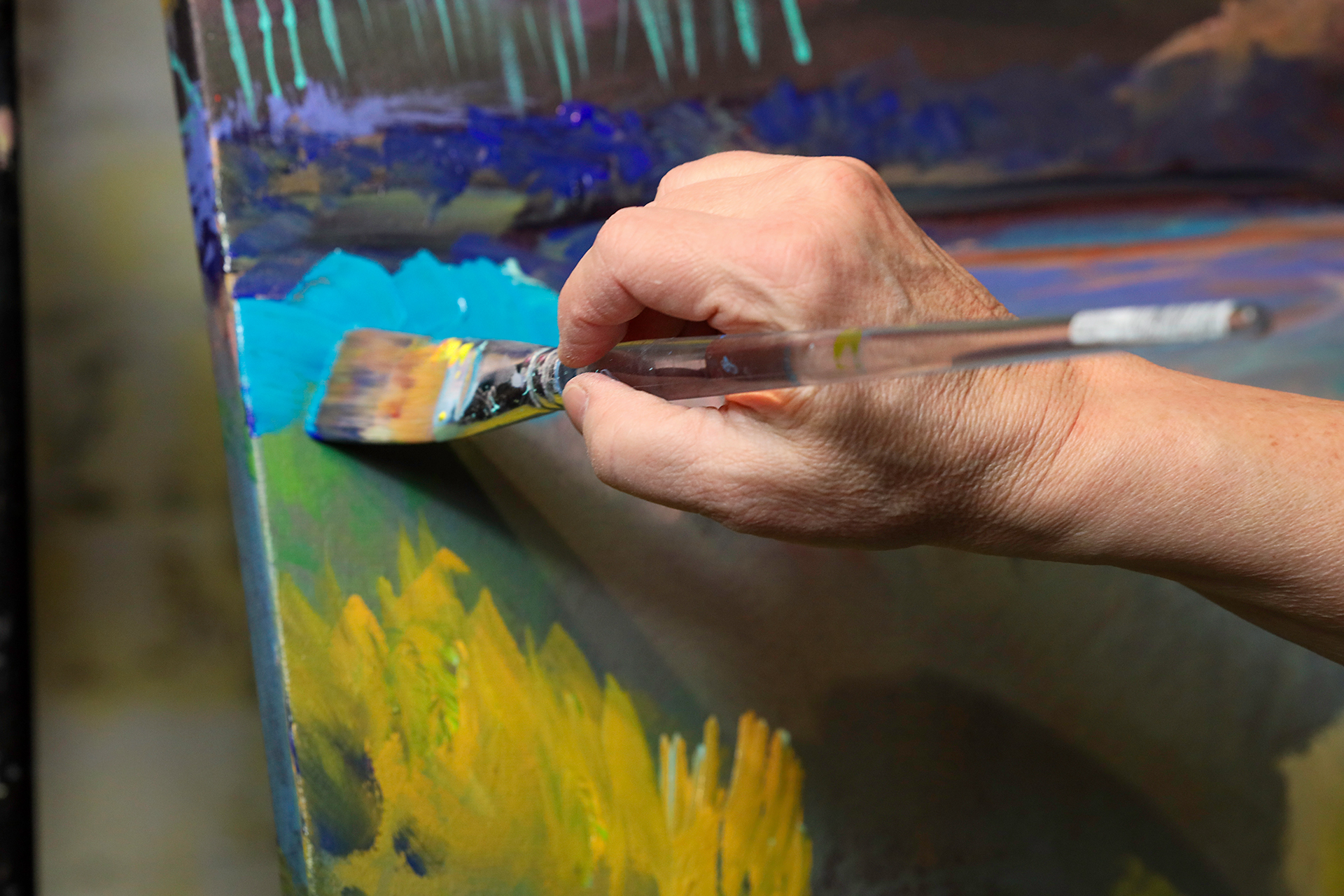
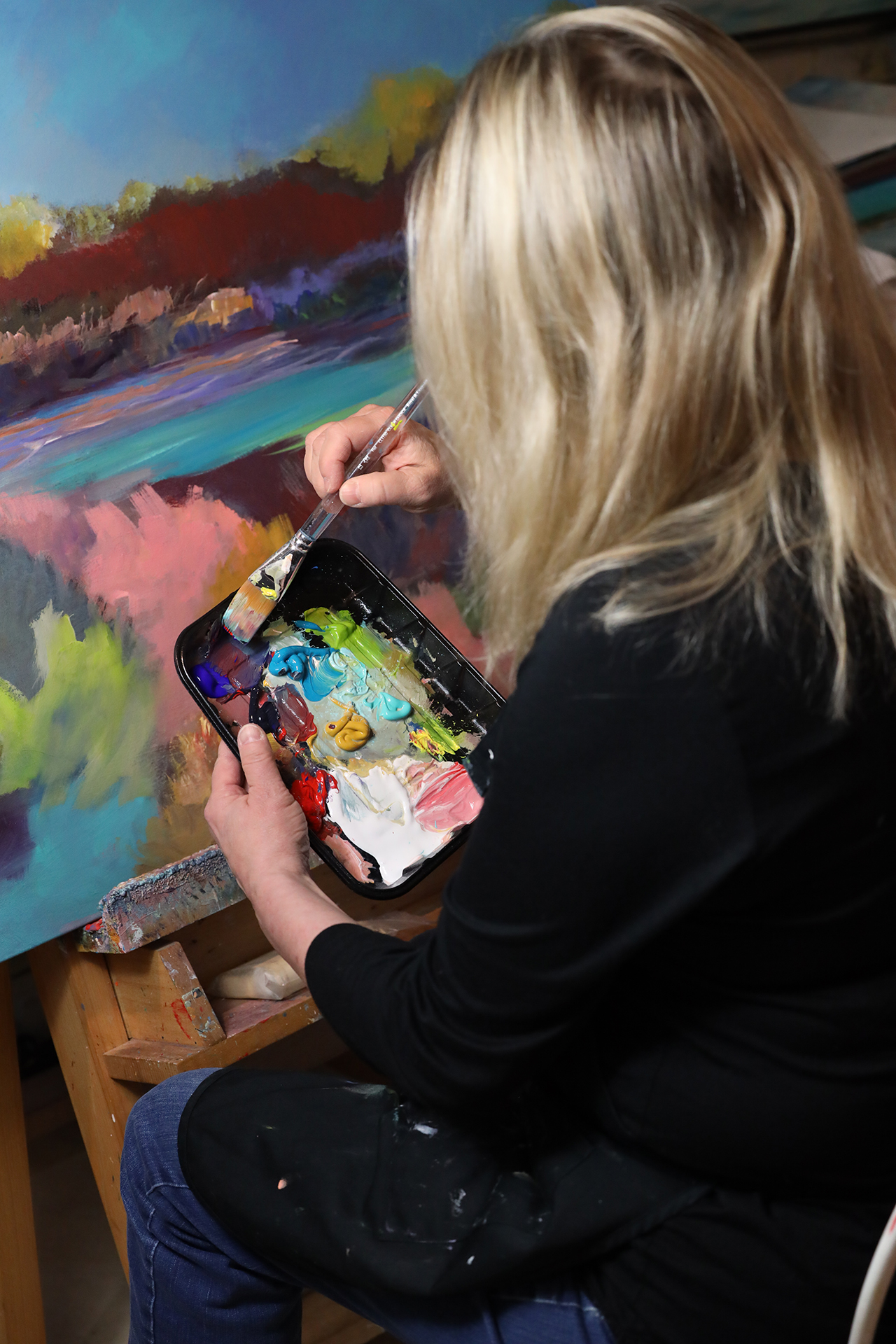
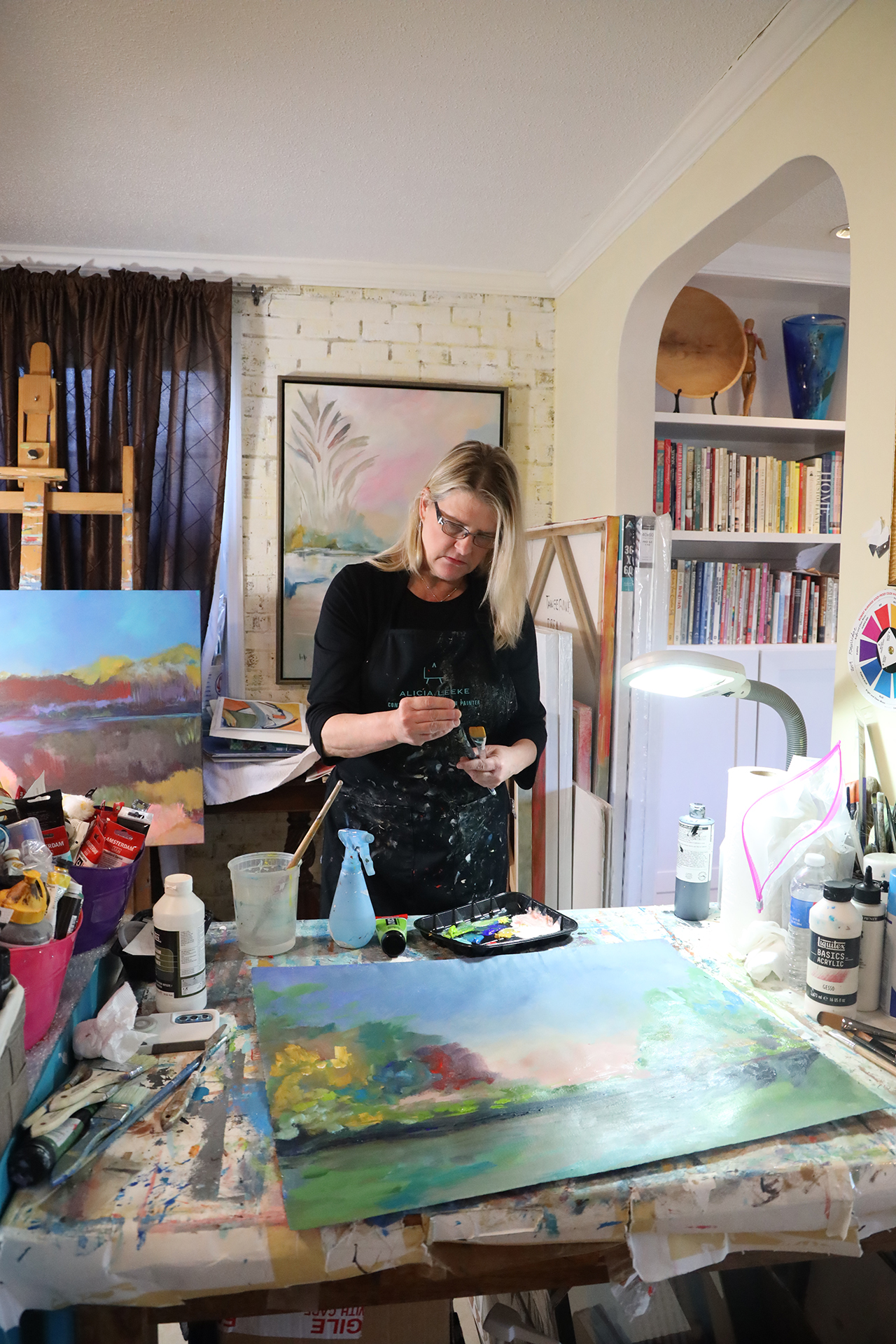
What started as a hobby in 2005 has become a full-time career for Columbia-based painter Alicia Leeke. She says it all started when she took a trip to France with Columbia College and was able to see the brushwork of the French Impressionists up close at the Musée d’Orsay.
Leeke is best known for her abstract landscapes, she often finds inspiration for her work in the world around her. A lot of her landscapes are inspired by the reflections in the lake in her backyard. However, her work spans styles, including digital painting. In collaboration with USC’s Department of Marine Biology, Leeke did water sampling all over SC and created digital abstract plankton paintings.
She teaches art classes at City Art and the Lourie Center, guiding students of all ages through everything from basic painting to professional art practices. Leeke is represented by Mitchell Hill Gallery in Charleston and City Art in Columbia.
Kirkland Smith
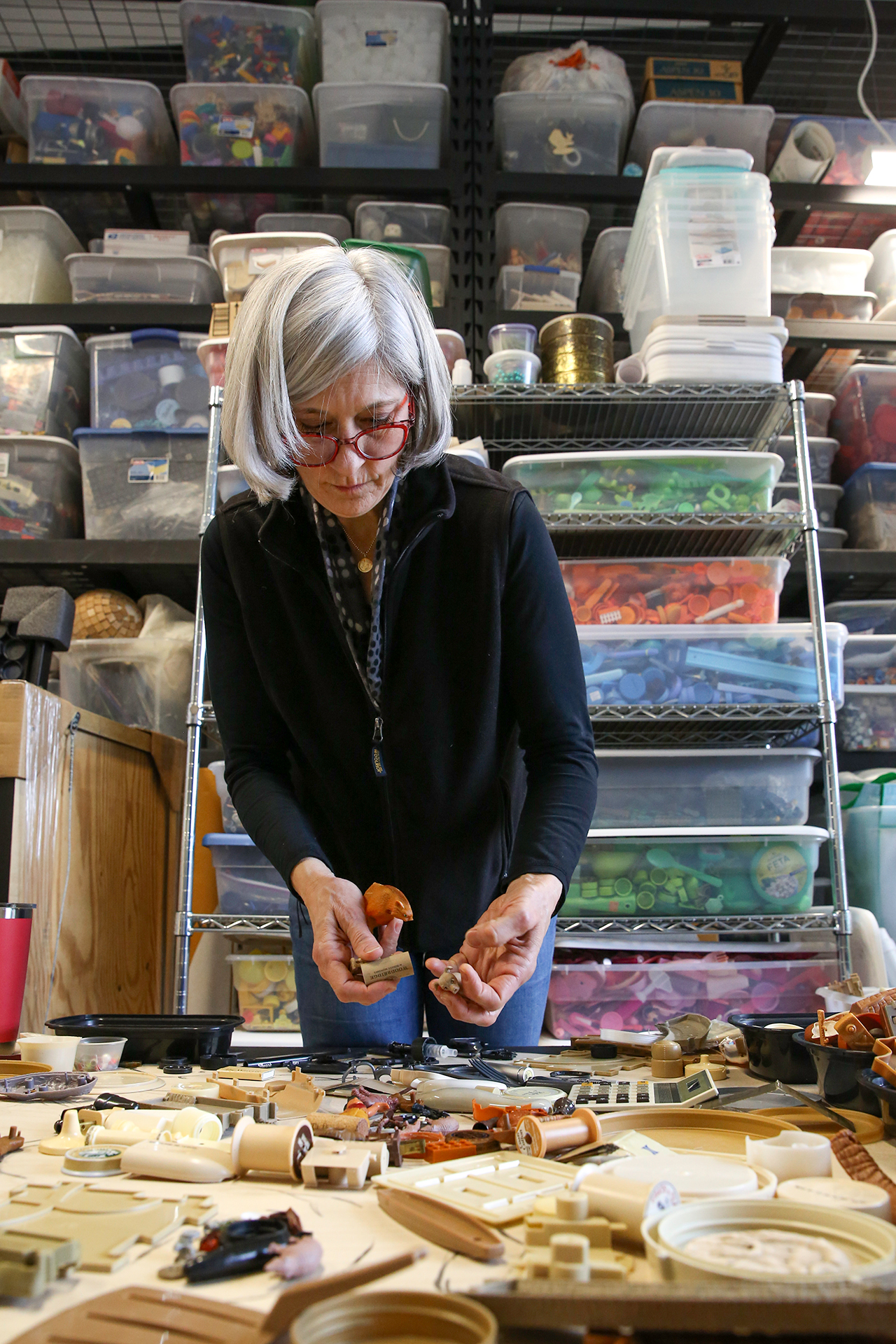
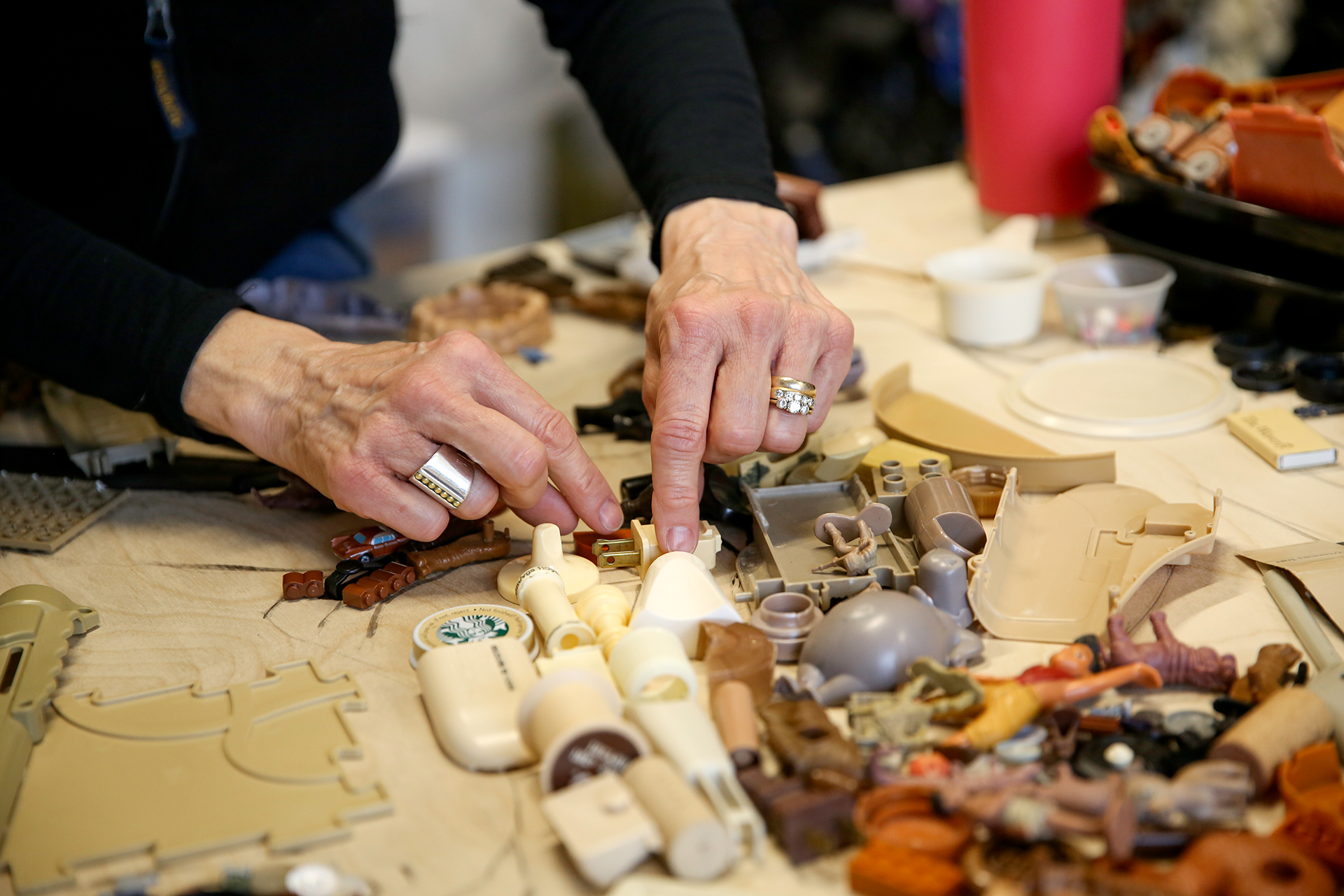
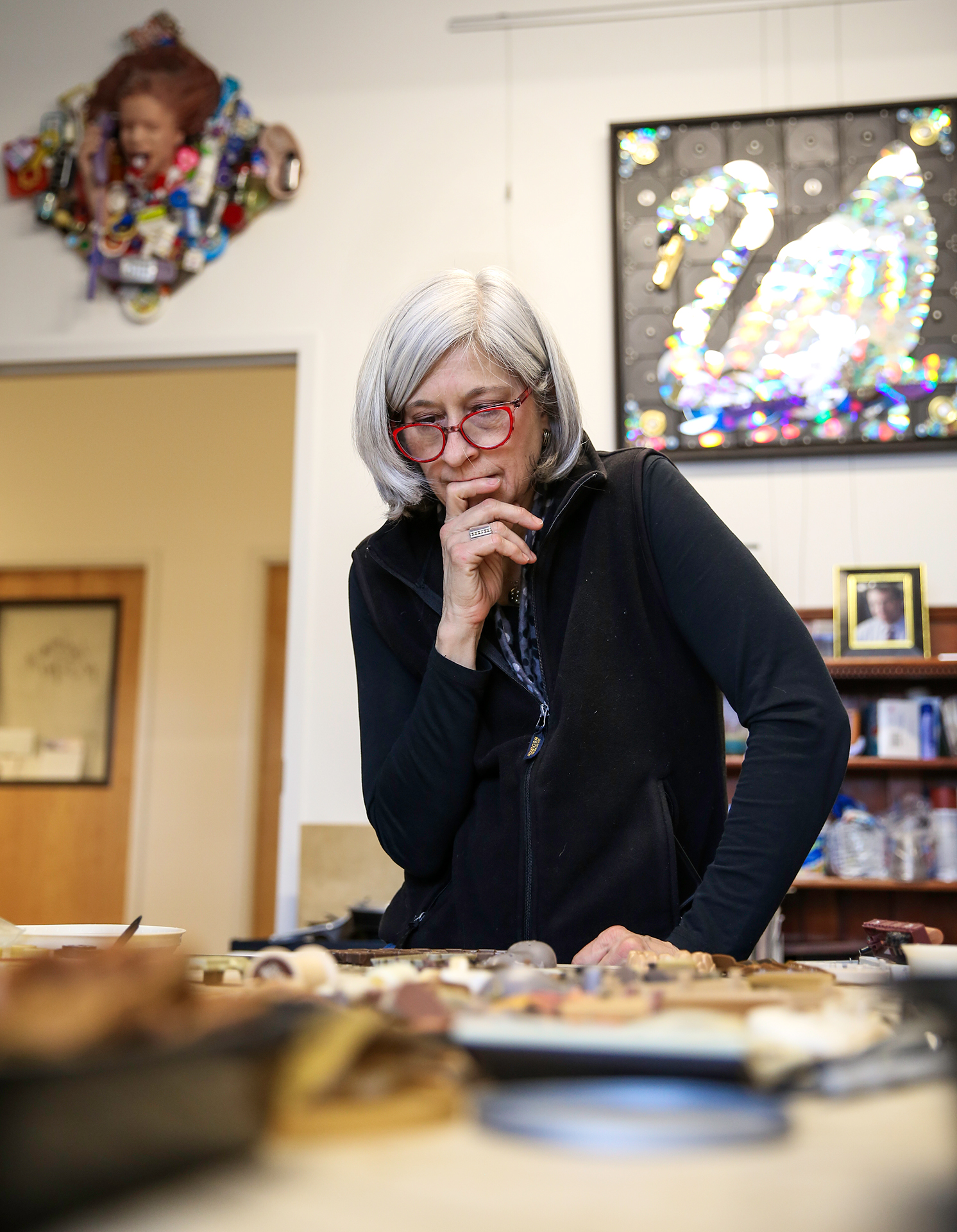
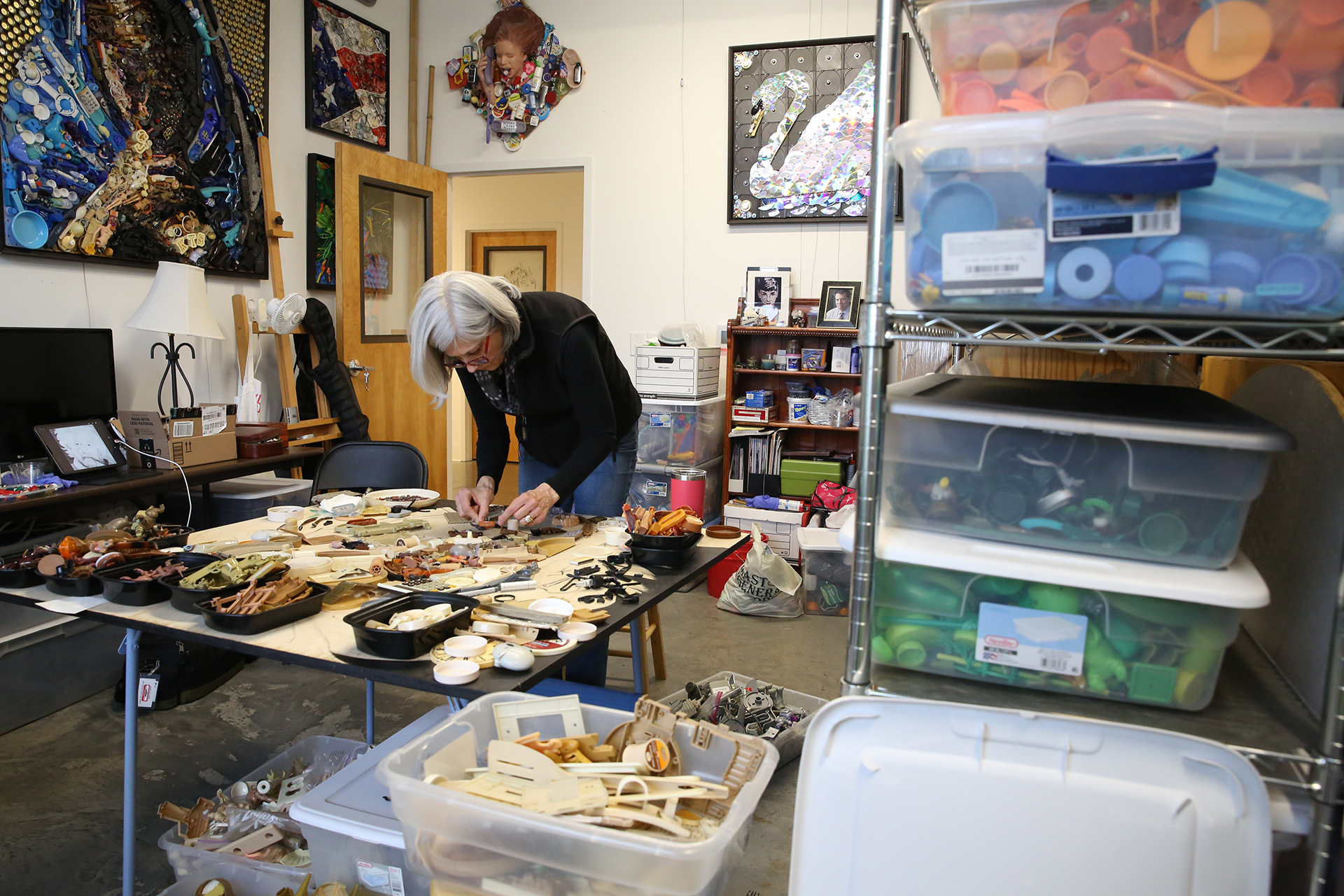
Kirkland Smith, an “assemblage” artist, creates detailed portraits using discarded objects, building each image like a puzzle. Starting with a loose sketch to anchor key features, she layers toys, caps, and packaging until the pieces blend into a face. Up close, her work looks abstract—but step back, and it sharpens like pixels coming into focus.
She doesn’t mix paint or alter colors. Instead, she relies on color values to shape the image. The materials come from her own life, thrift stores, and even strangers who mail her their trash. Commissions often include personal items from clients, making each portrait a time capsule of their world.
Though the process can take months, she keeps going even when inspiration runs dry. For Smith, showing up to work is how the spark returns—one object at a time.

 Sarah Moore